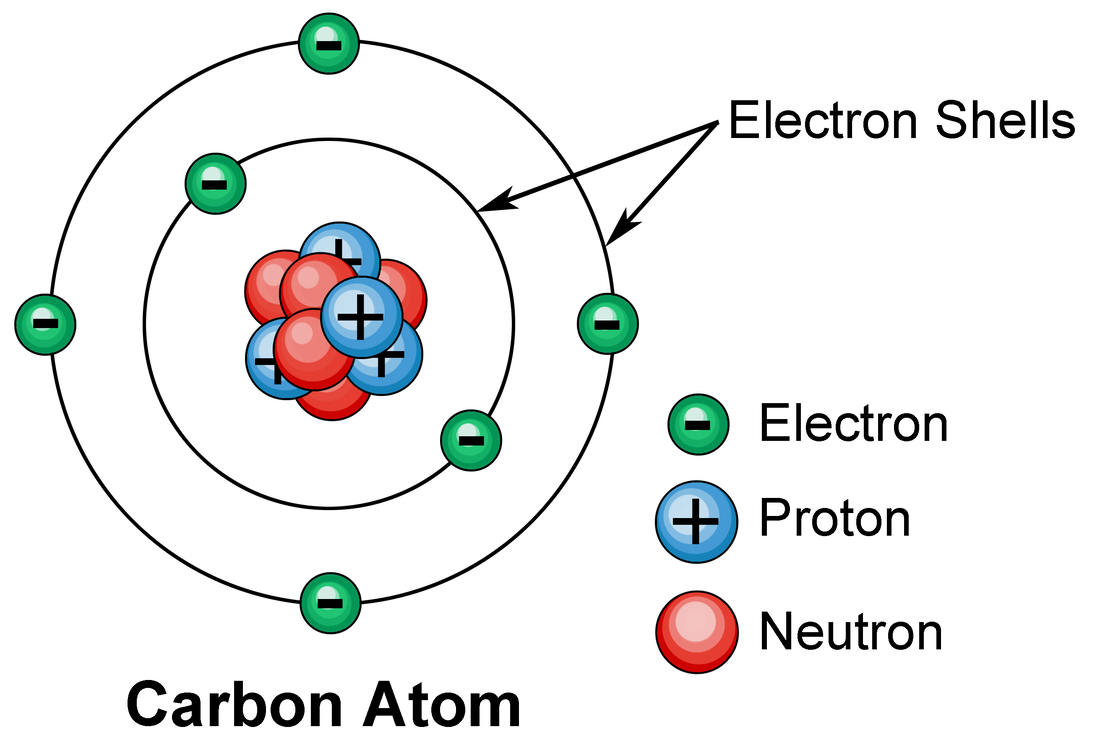
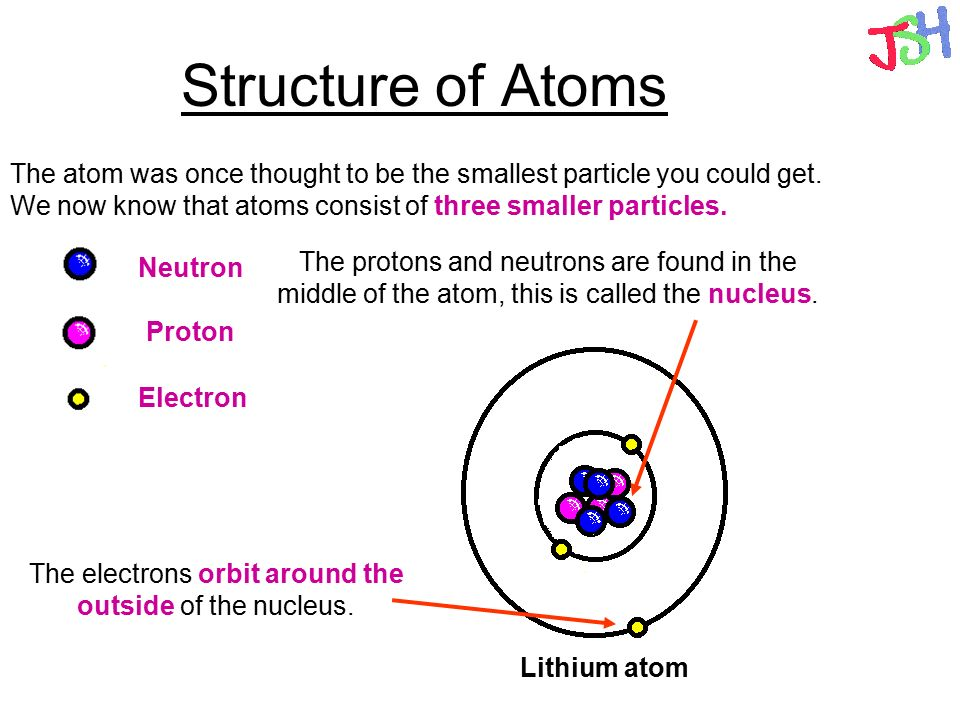
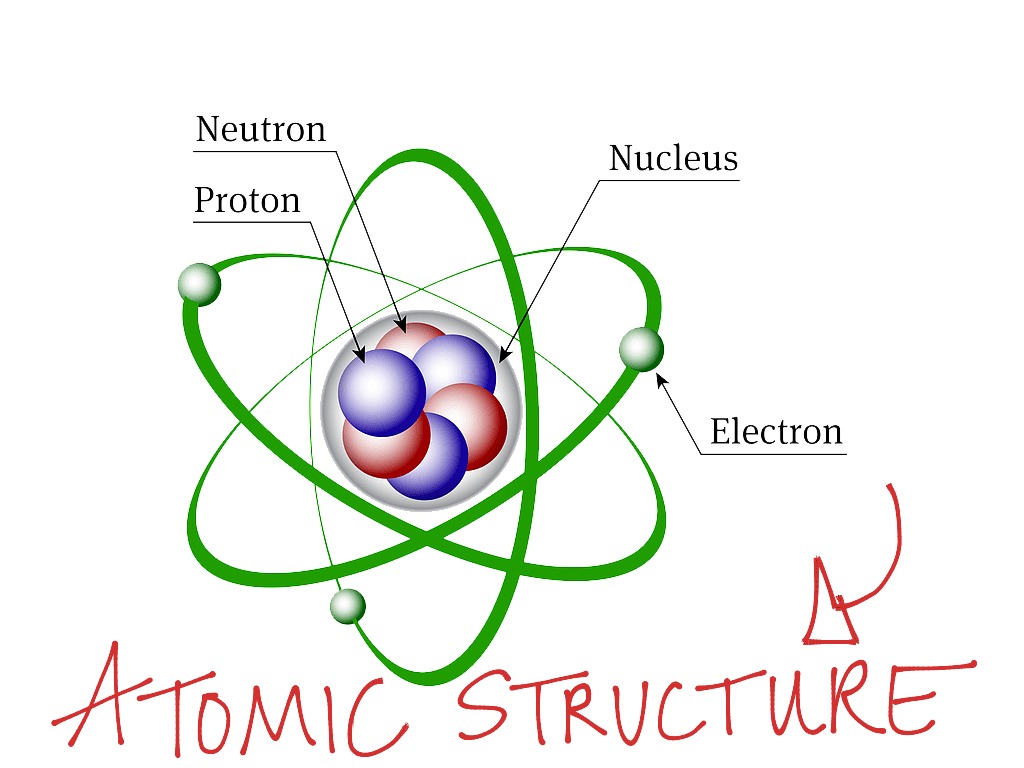
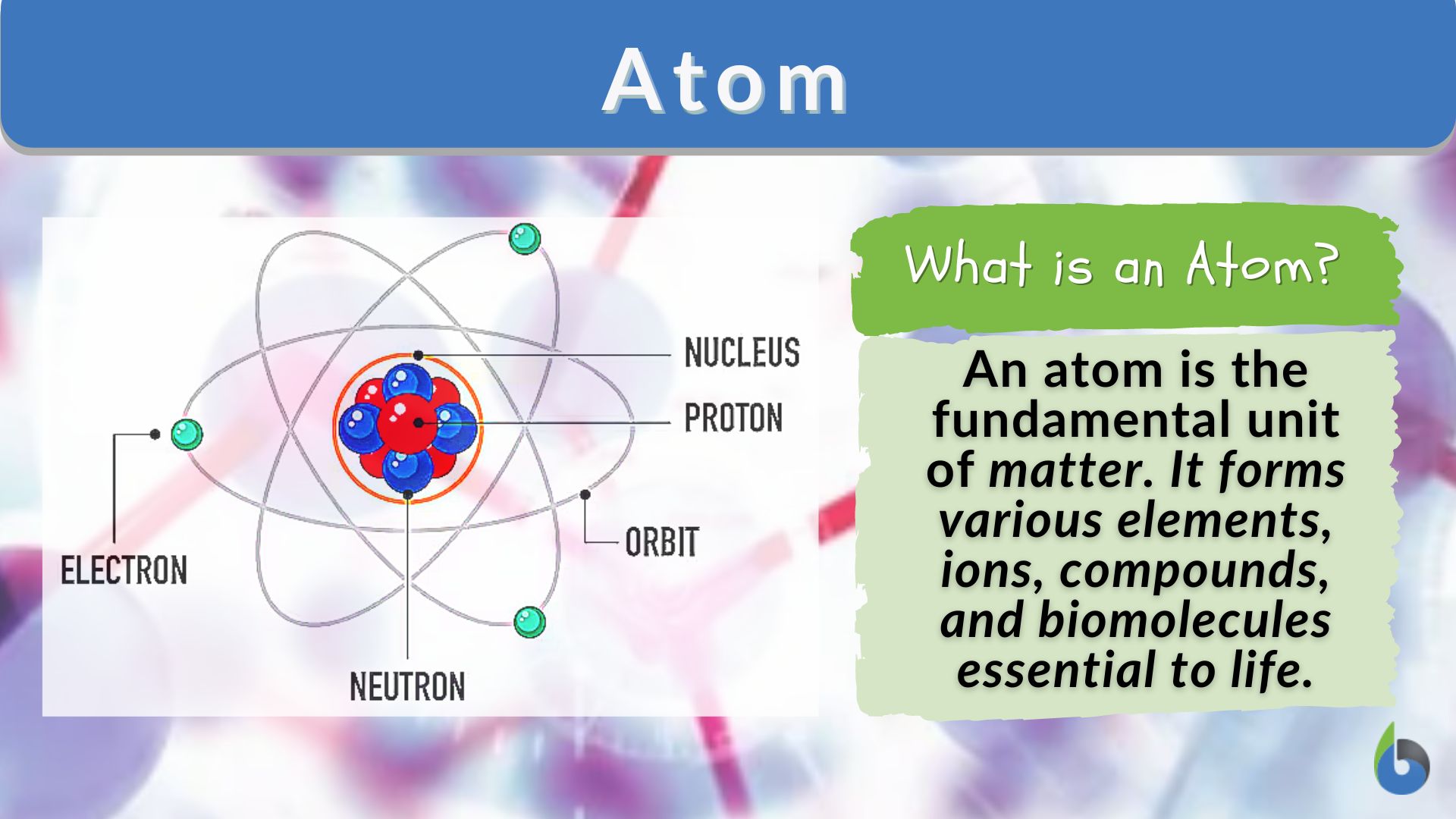
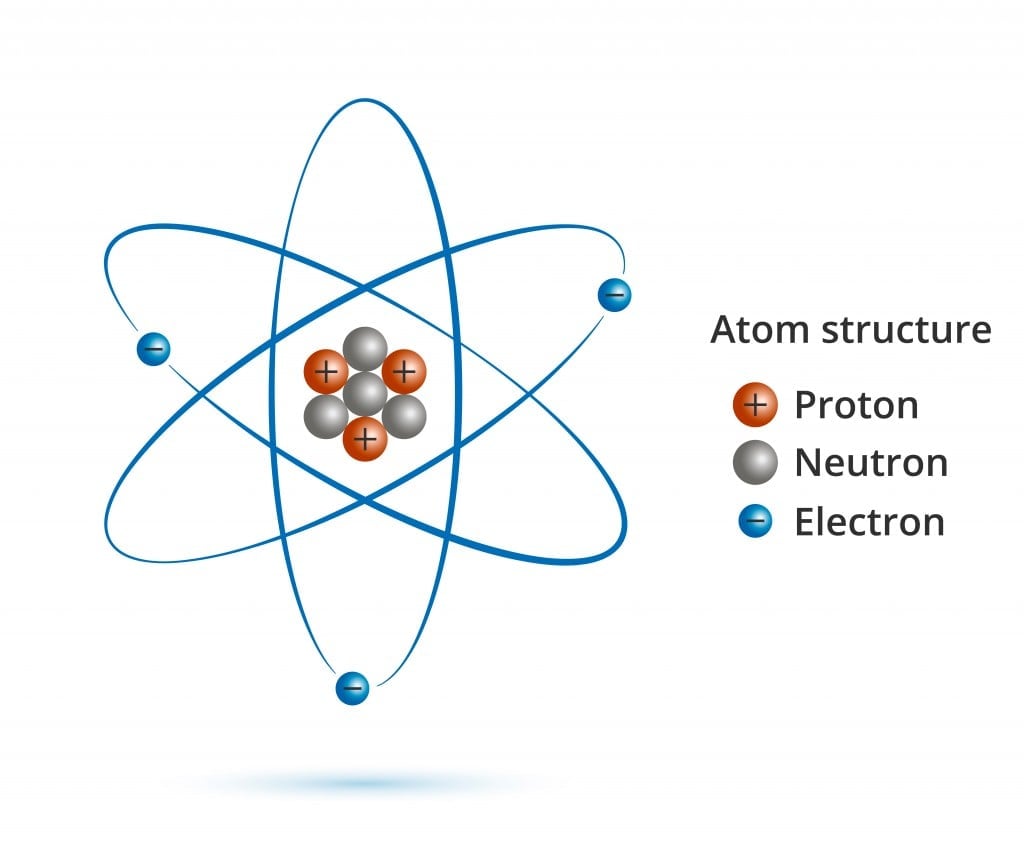
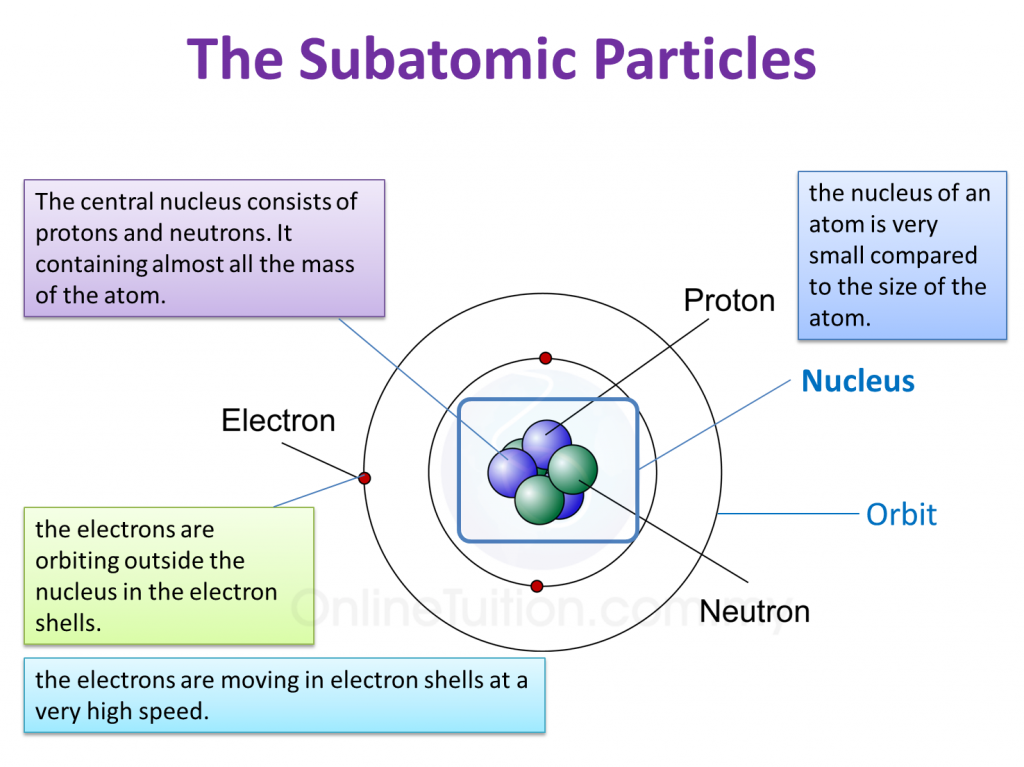
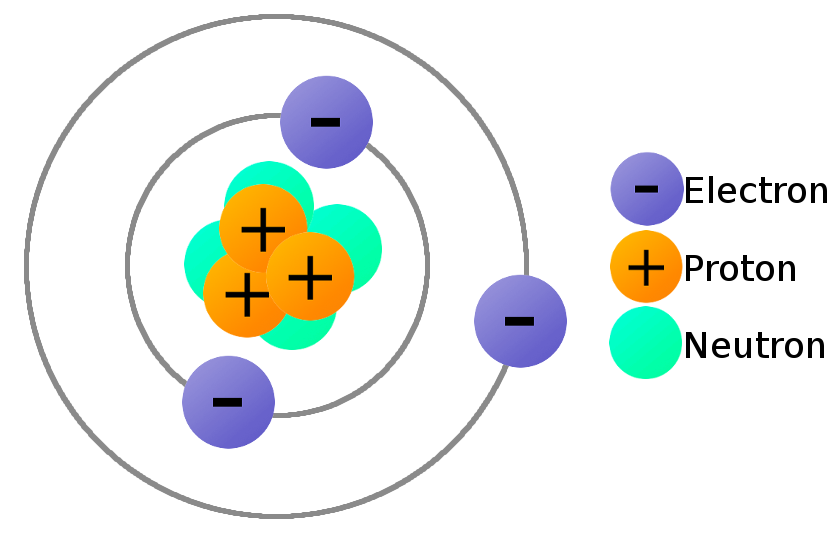
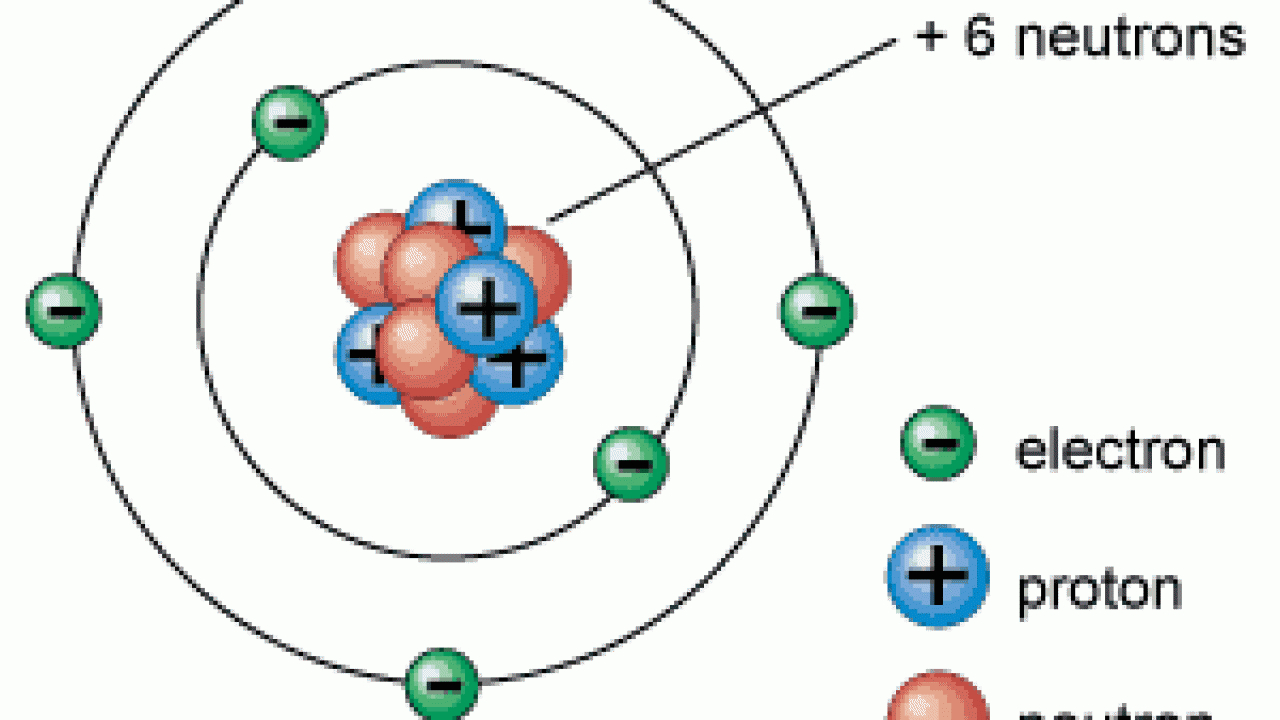
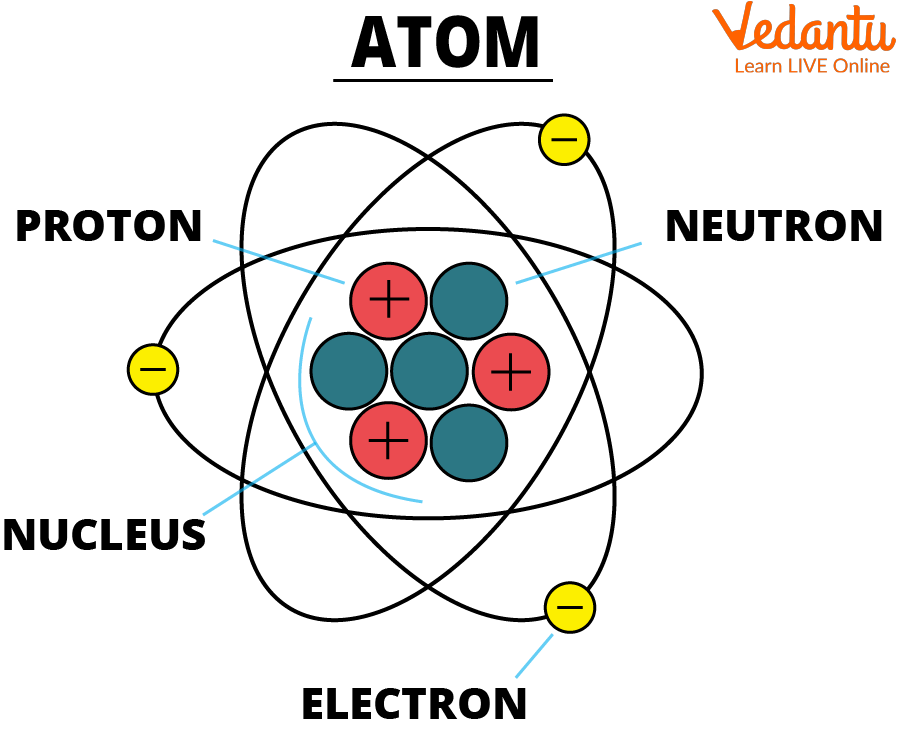
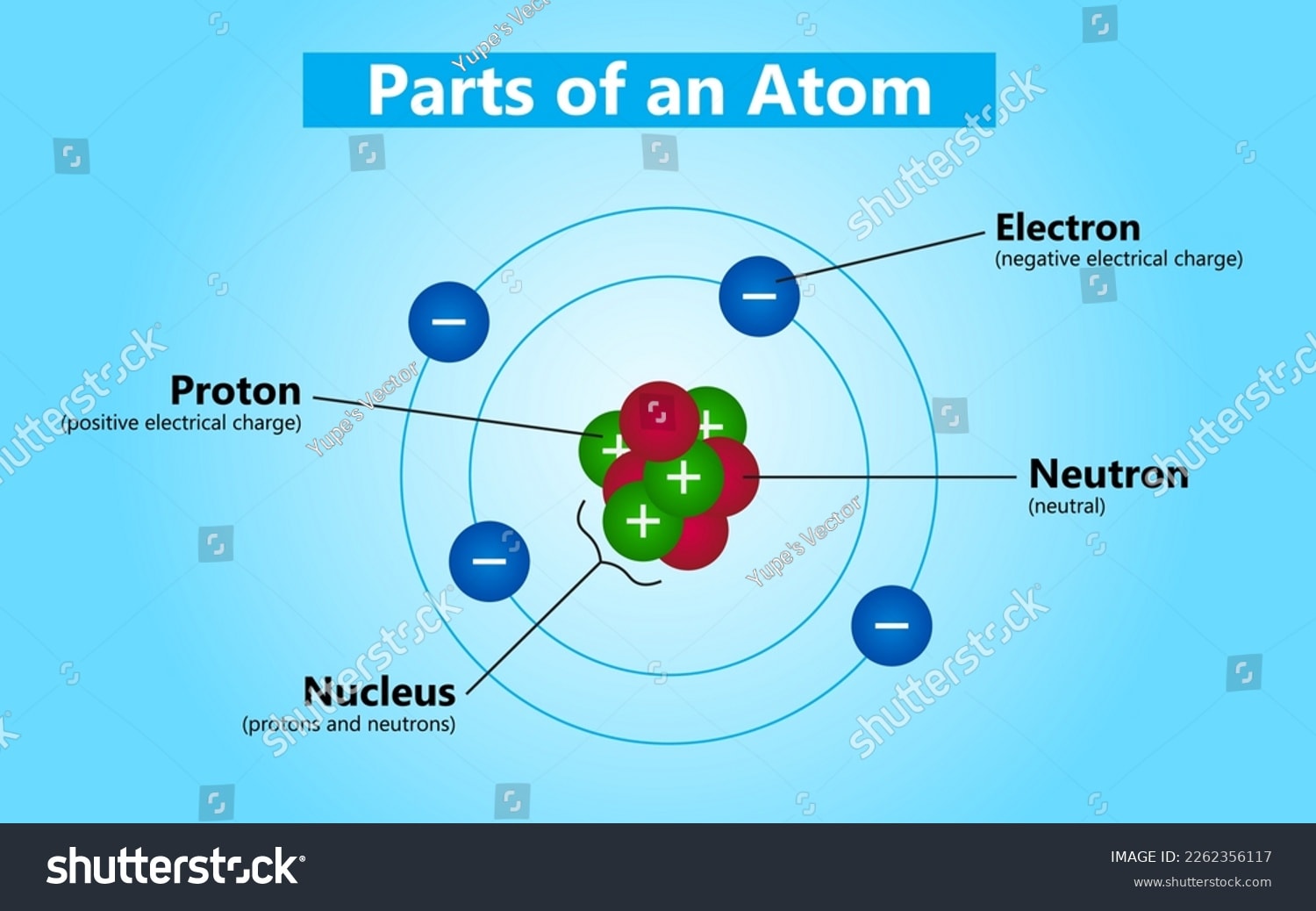
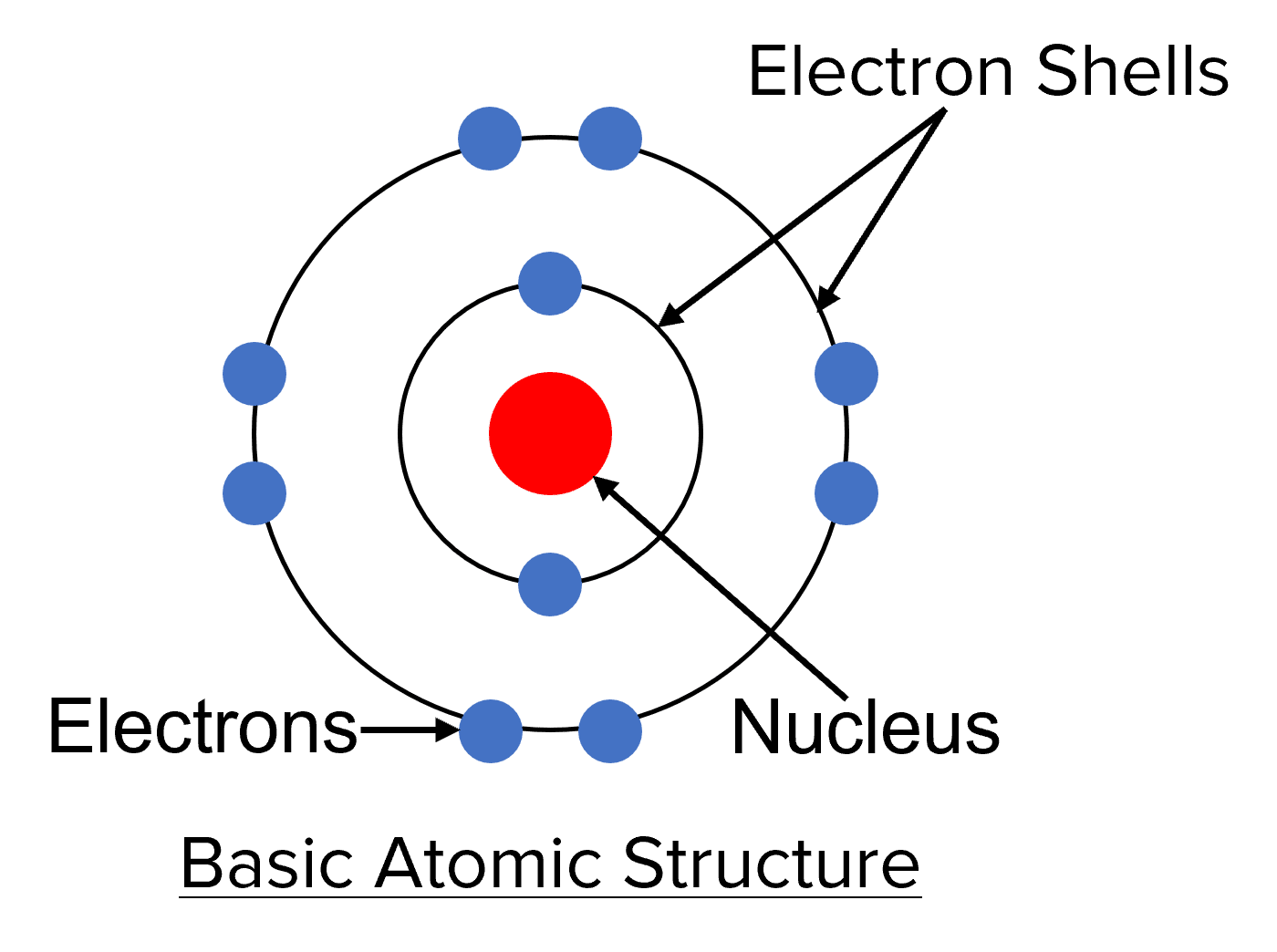
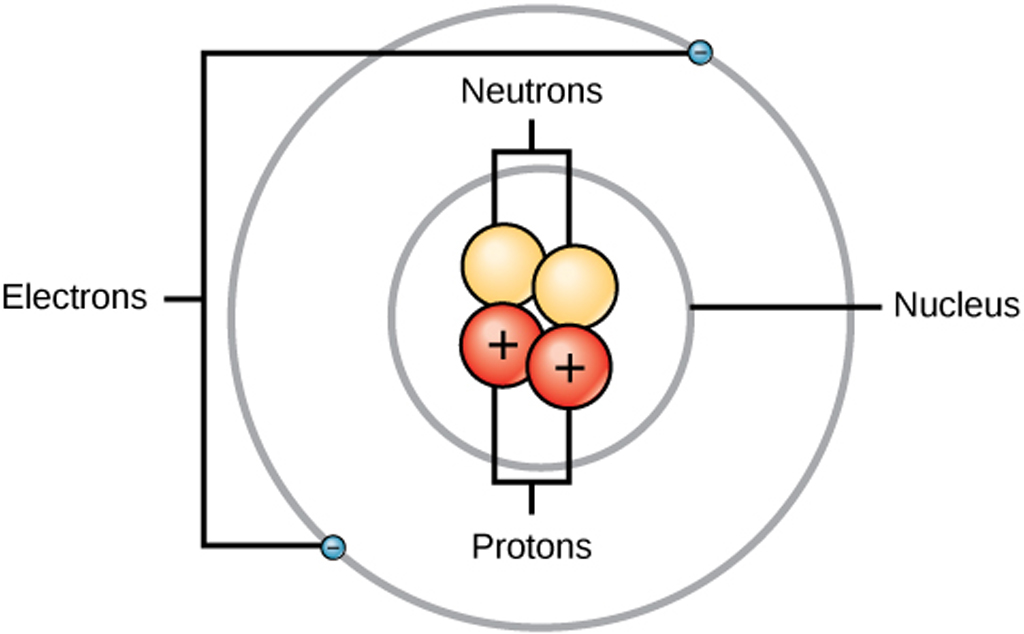
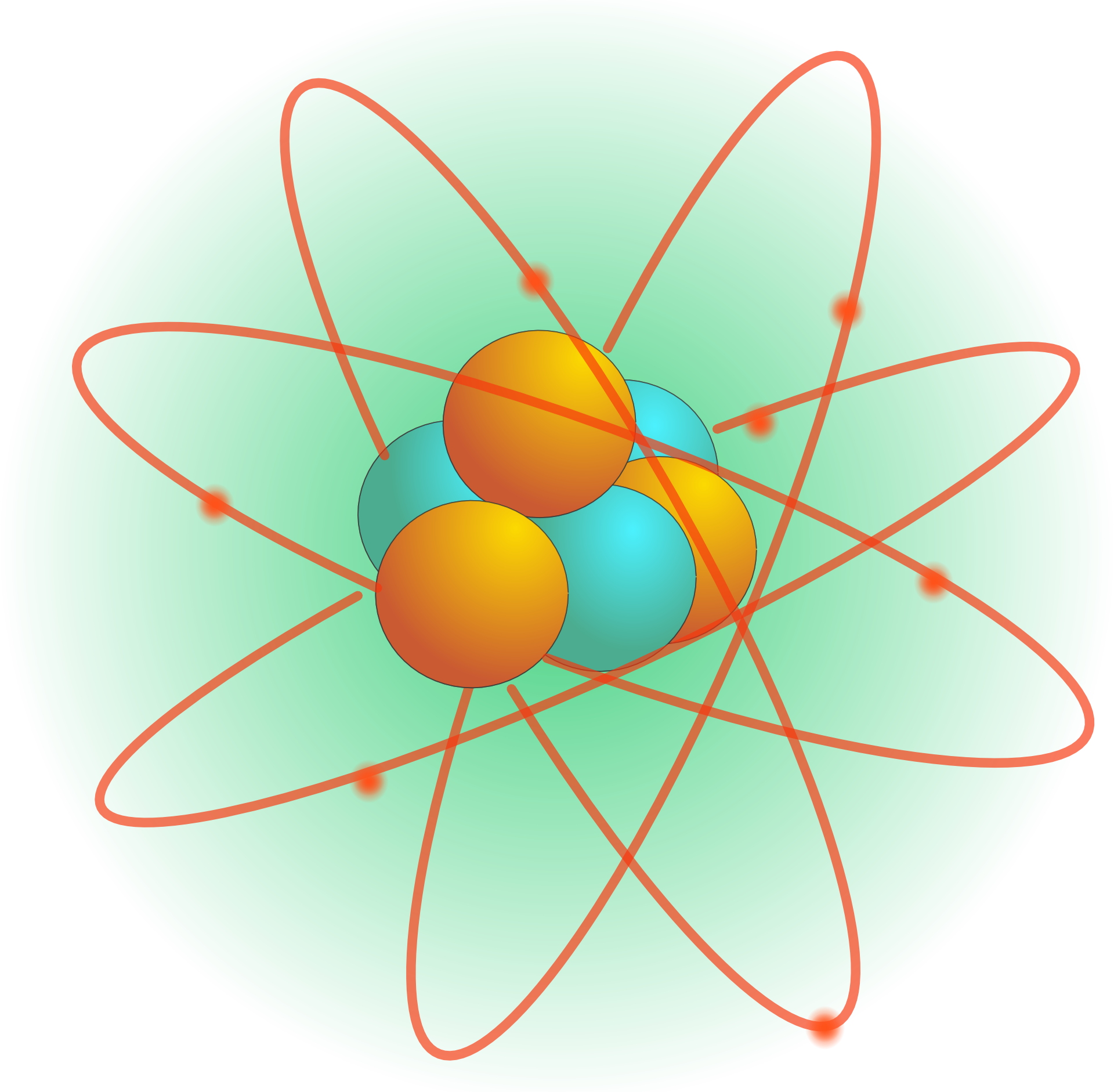
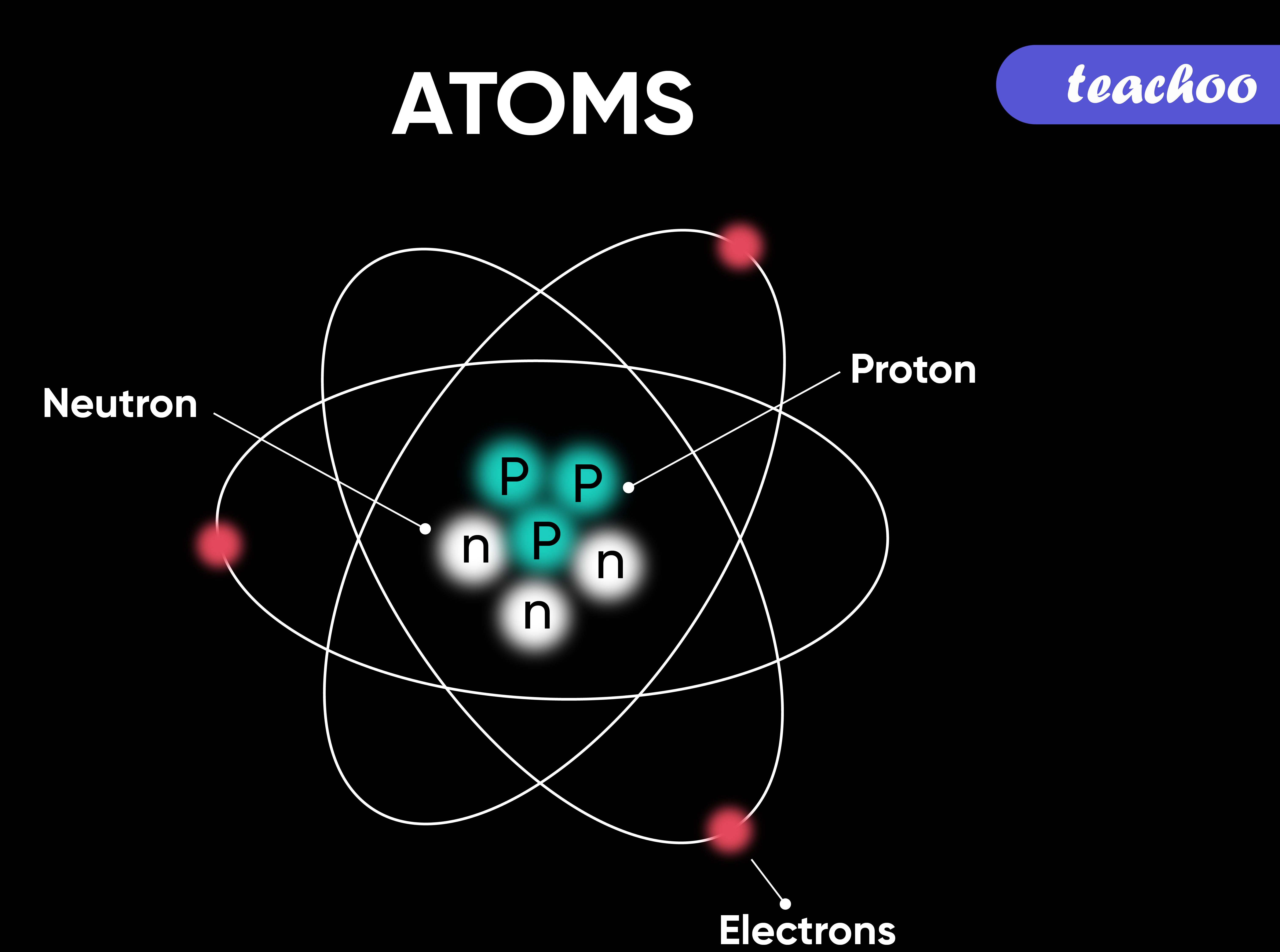
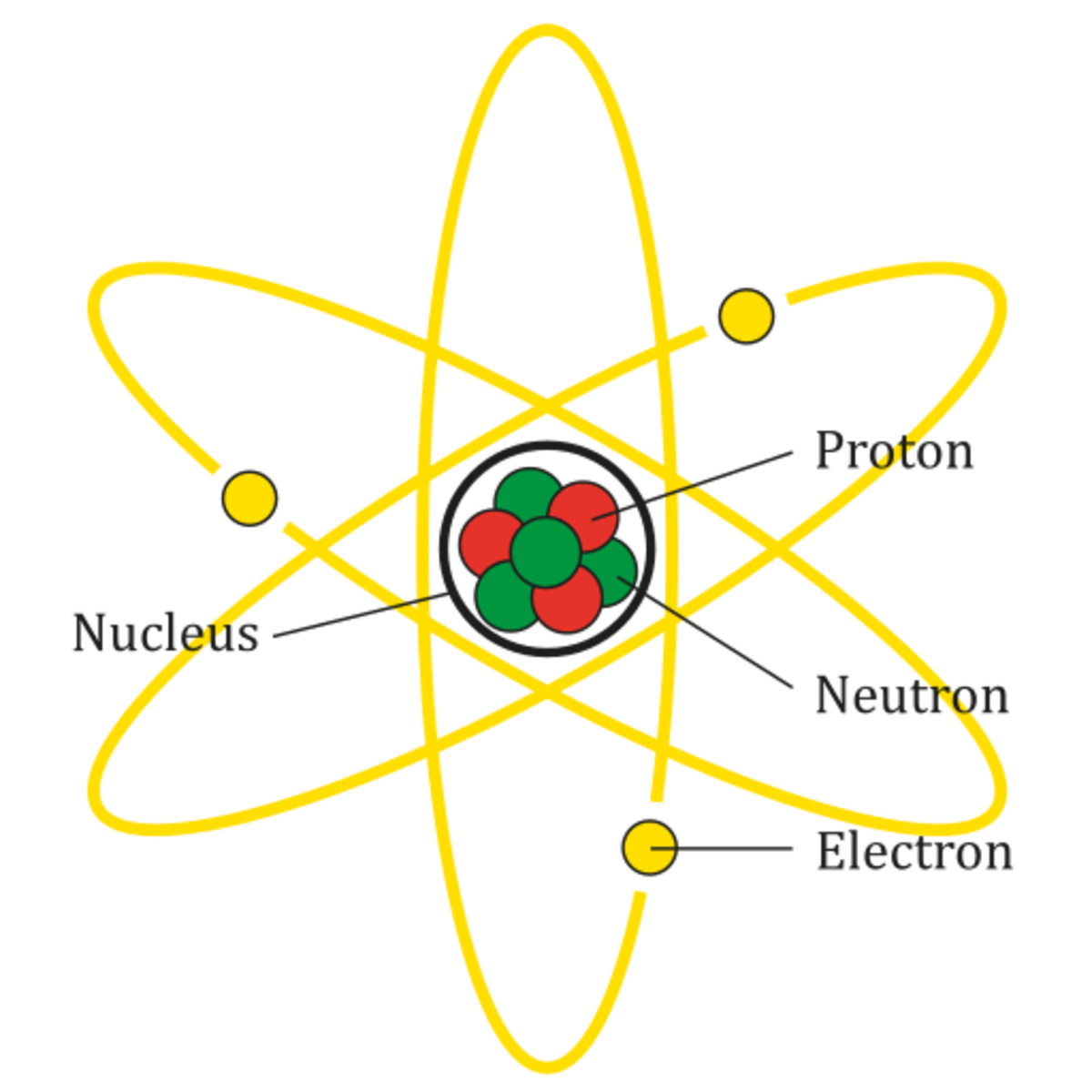
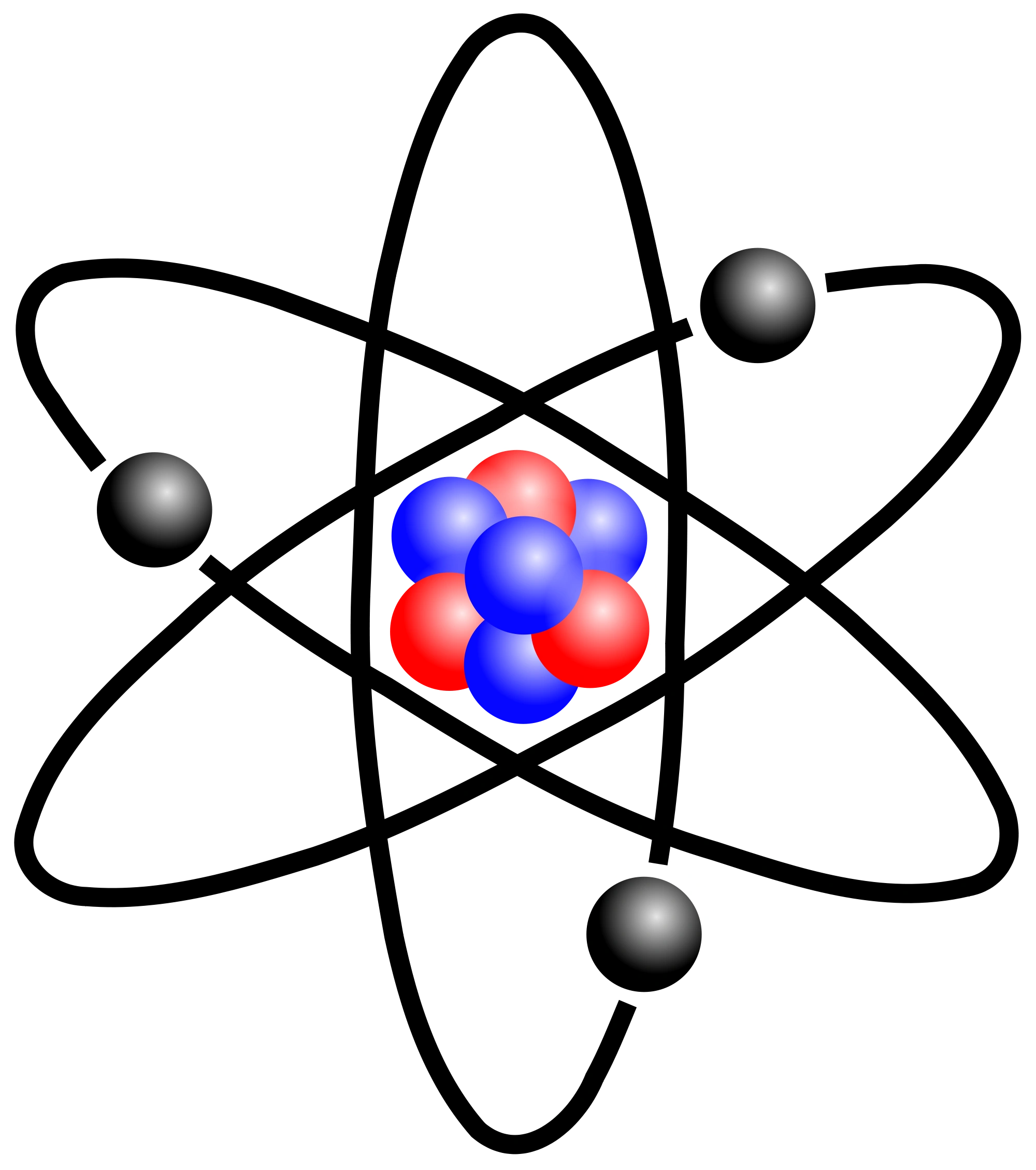
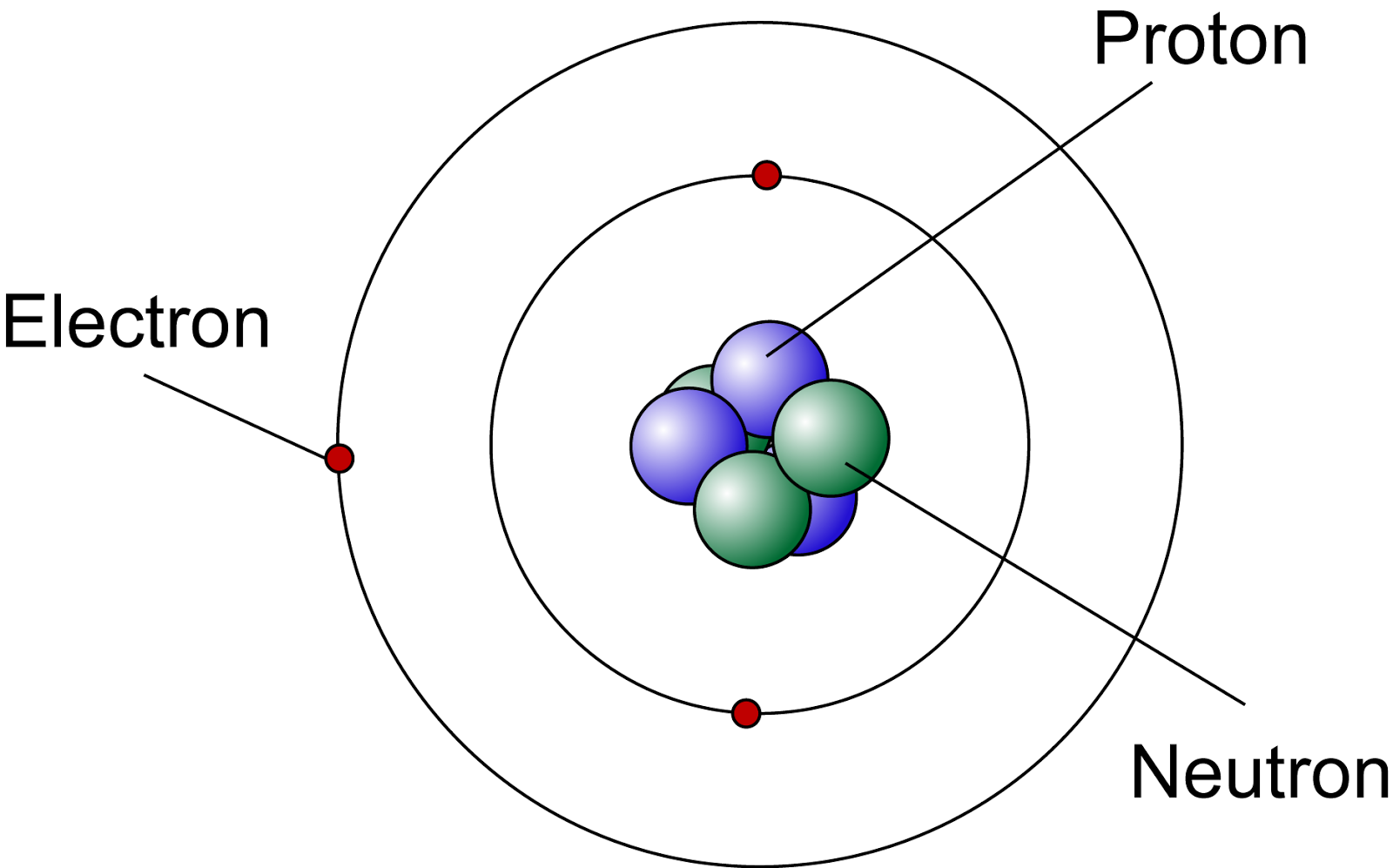
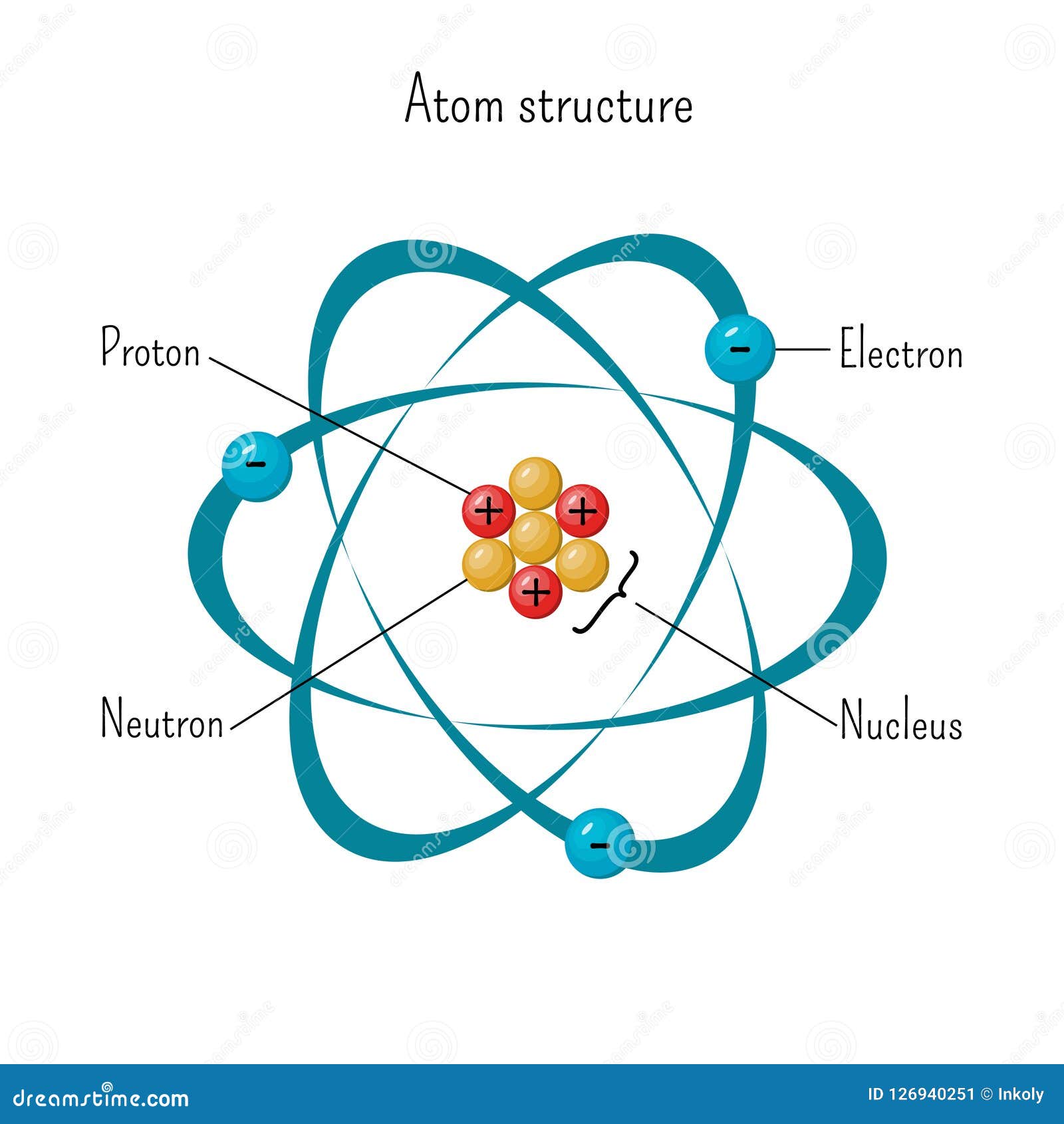
An atom is defined as the smallest part of a chemical element that retains the chemical properties of the element. Atoms are comprised of three subatomic particles called protons, neutrons and electrons. The positively charged protons and neutrons (which have no charge) make up the atom's nucleus, or center, while the negatively charged electrons orbit around the nucleus.. In this article, we familiarize you with the basic structure of an atom. Basic Diagram of an Atom. Most of an atom is just empty space and consists of a positively charged nucleus of protons and neutrons surrounded by a cloud of negatively charged electrons. The center of an atom is the nucleus and one or more electrons surrounding the nucleus.


:max_bytes(150000):strip_icc()/atom-artwork-160936095-58a8f5683df78c345b8e53be.jpg "The Most Basic Unit of Matter The Atom")

/GettyImages-141483984-56a133b65f9b58b7d0bcfdb1.jpg "Basic Model of the Atom Atomic Theory")


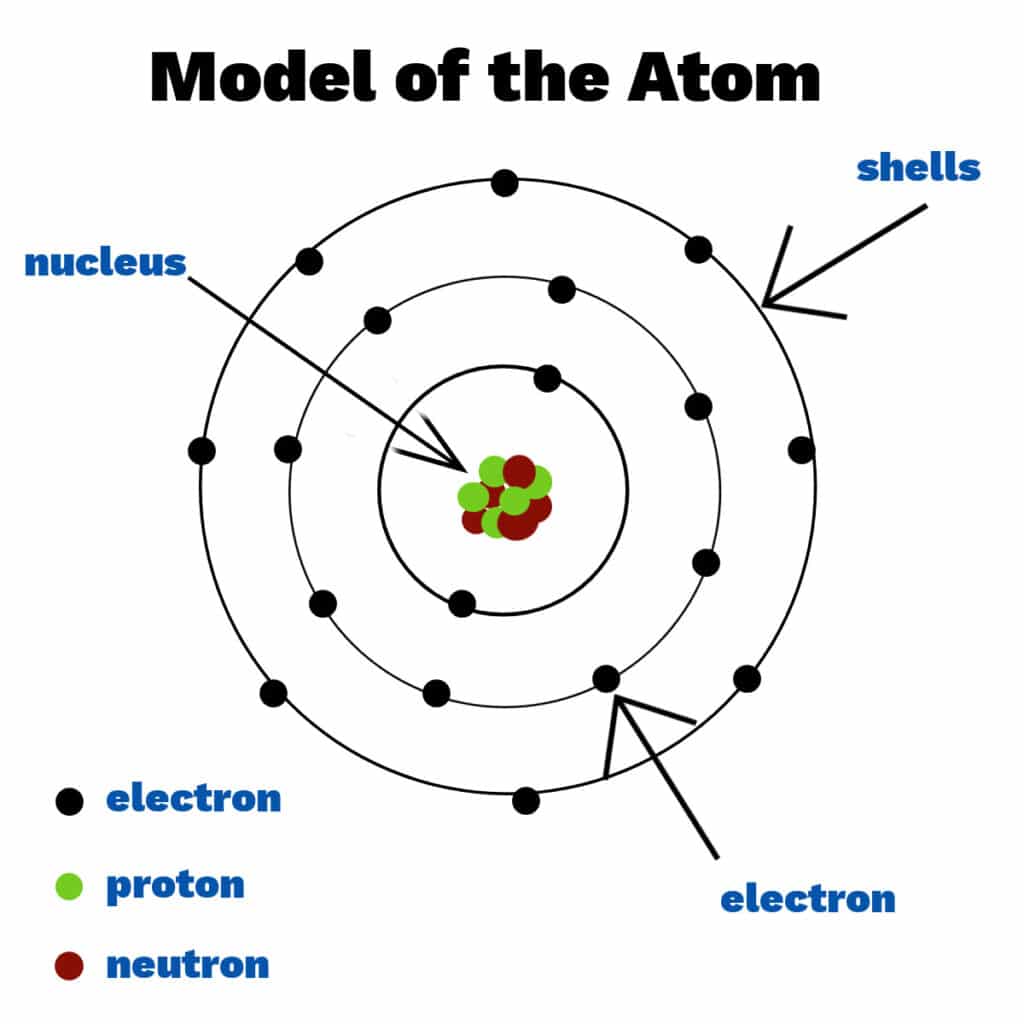
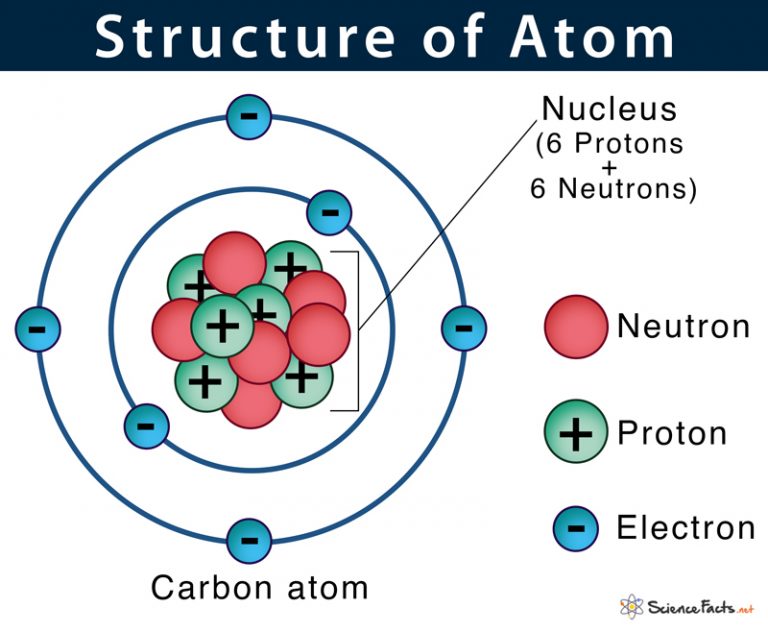
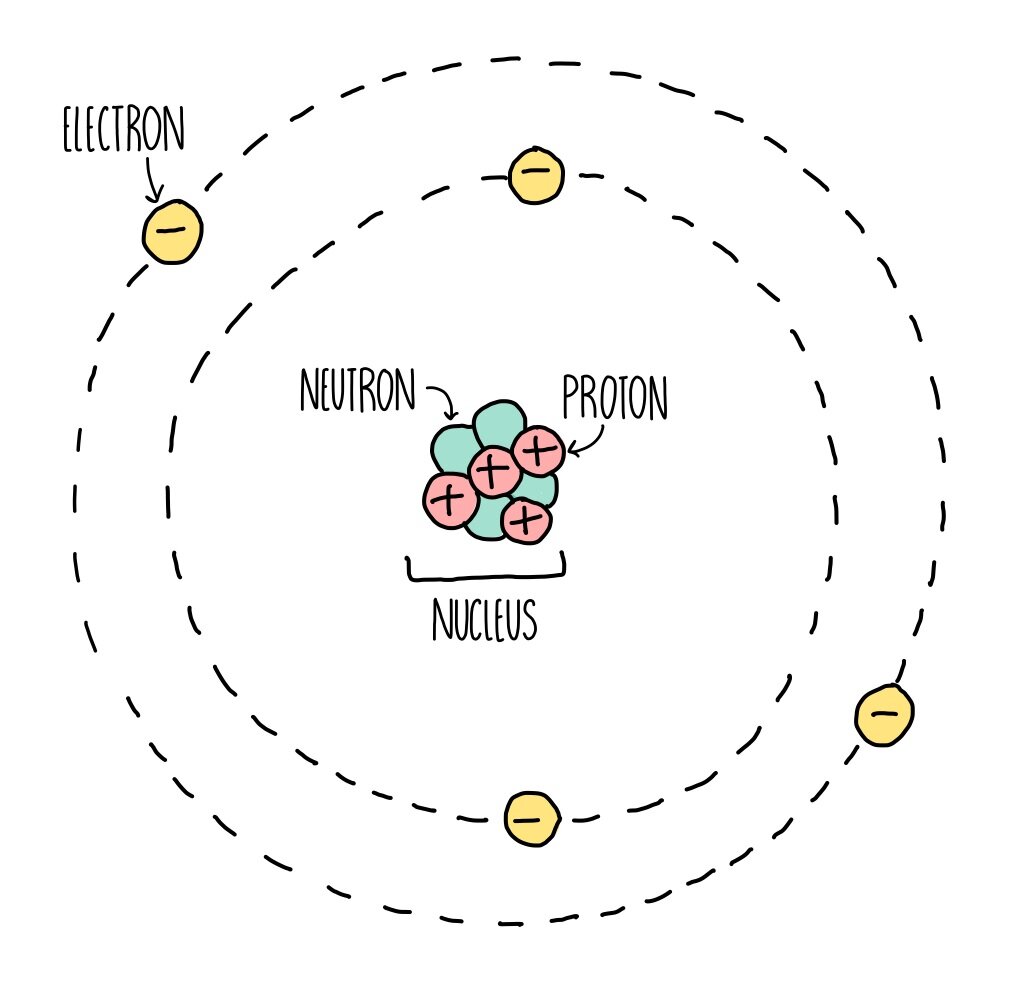
An atom consists of a nucleus of protons and generally neutrons,. Chemistry is the science that studies these changes. History of atomic theory. In philosophy. The basic idea that matter is made up of tiny indivisible particles is an old idea that appeared in many ancient cultures.. This diagram shows the half-life (T 1.. The term 'atom' was derived from the Greek word 'atomos', meaning 'indivisible'. The ancient Greek and Indian philosophers were the first to think atom as the basic unit of all matter in the universe. In the early 19 th century, scientists started understanding the atom's structure with their inner parts in more detail. In 1926.